+91 7042404014
KUWAIT COUNTRY FACTFILE
Kuwait is a small but strategically important country located in the northeastern part of the Arabian Peninsula, bordering Iraq to the north and west, Saudi Arabia to the south, and the Persian Gulf to the east. With a population of around 4.5 million, of which nearly 70% are expatriates, Kuwait is one of the wealthiest nations in the world in terms of per capita income due to its vast oil reserves.
The landscape of Kuwait is mostly flat desert with very little vegetation. The country has a 499 km-long coastline along the Persian Gulf, featuring sandy beaches, tidal flats, and Kuwait Bay. It also has several islands, including Failaka Island, which has historical significance dating back to the Bronze Age.
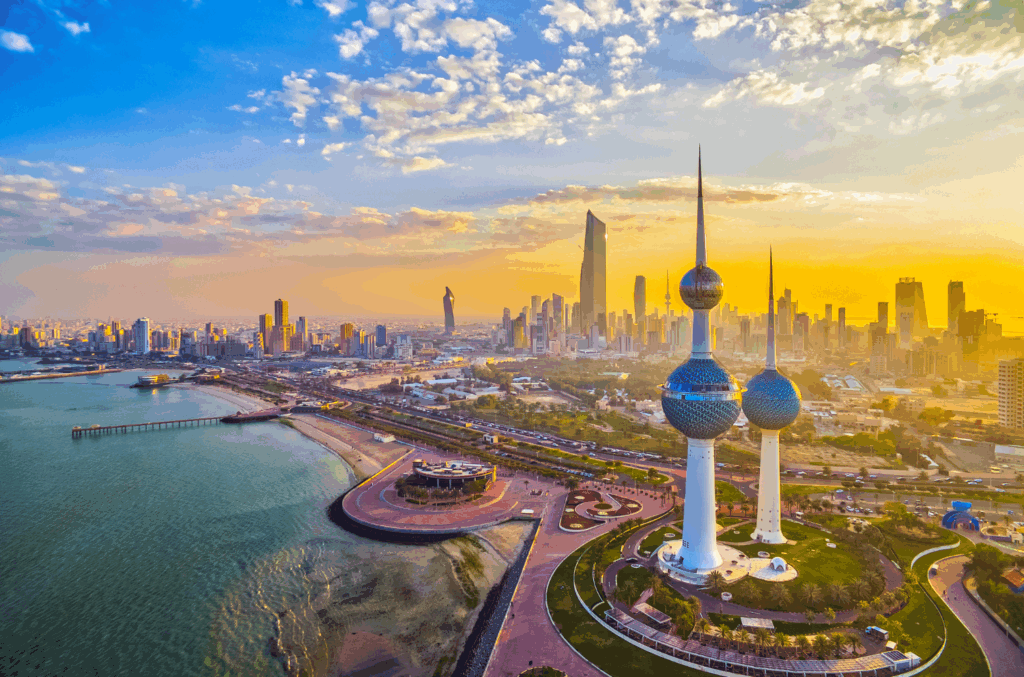
Kuwait City is the capital and largest city, and serves as the economic, political, and cultural center of the country. Other notable cities and towns include Hawalli, Salmiya, and Fahaheel. Kuwait is known for its impressive skyline, modern architecture, and vibrant cultural scene.
The country has a rich heritage influenced by Bedouin traditions, Islamic values, and its maritime history. Museums, mosques, and traditional souks (markets) coexist with luxurious malls and modern towers. Kuwait’s economy is largely dependent on oil exports, but the government is working on economic diversification through its “New Kuwait Vision 2035.”
Kuwait has a desert climate with extremely hot summers and mild winters. The best time to visit is from November to March, when the weather is cooler and suitable for outdoor activities.
WEATHER AND BEST TIME TO VISIT
Kuwait experiences a hot desert climate characterized by long, scorching summers and short, mild winters. From May to September, temperatures often exceed 45°C (113°F), accompanied by dry winds and occasional dust storms.
Winters (November to March) are pleasant, with daytime temperatures ranging between 15°C and 25°C (59°F to 77°F), and cooler nights. Rainfall is sparse and usually occurs in brief, irregular showers during the winter months.
The best time to visit Kuwait is during the cooler months from November to March, when the weather is suitable for sightseeing, desert excursions, and waterfront activities.
HOW TO REACH
Kuwait is well-connected regionally and internationally, making it easy to access for travelers from Asia, Europe, and the Middle East.
By Air: Kuwait International Airport (KWI), located about 16 km from Kuwait City, is the main gateway into the country. It is served by Kuwait Airways, Jazeera Airways, and numerous international carriers connecting to major cities in Asia, Europe, and the Middle East.
By Land: Kuwait is connected to Saudi Arabia and Iraq by road, with border checkpoints at Nuwaiseeb (to Saudi Arabia) and Abdali (to Iraq). Entry via land is possible but subject to visa rules and security considerations.
By Sea: While Kuwait has commercial and cargo ports, passenger and cruise services are limited. The Port of Shuwaikh and Port of Shuaiba handle sea traffic and logistics.
Domestic Travel: Kuwait is a small country, and intercity travel is mainly by car or taxi. Buses also connect different parts of the country.
LOCAL TRANSPORTATION
Kuwait’s transportation infrastructure is centered around roads, with a growing focus on modernization.
FOOD AND DRINKS, NIGHTLIFE
Kuwaiti cuisine is a flavorful blend of Arabian, Persian, Indian, and Mediterranean influences. Traditional dishes include machboos (spiced rice with meat), muttabaq samak (fish with rice), and harees. Dates, Arabic coffee, and local desserts like ghuraiba and khabeesa are also staples.
The country’s multicultural population has led to a vibrant international food scene, with a wide range of Indian, Lebanese, Italian, and Asian restaurants.
Alcohol is strictly prohibited in Kuwait — it is illegal to possess, consume, or import alcoholic beverages. As a result, nightlife is family-friendly and revolves around cafés, restaurants, seaside promenades, and shopping malls. Shisha lounges are a common social gathering place.
VISA RULES
Kuwait offers visa-free or visa-on-arrival access to citizens of certain countries, including GCC nationals. Other travelers can apply for an eVisa or obtain a tourist visa through the official Kuwait government portal or via a sponsor in Kuwait.
Visitors must have a passport valid for at least six months and may be required to show hotel reservations or sponsor details. Visa rules are subject to change, so it’s best to check with the Kuwaiti embassy or consulate before traveling.
SAFETY
Kuwait is generally a safe country with a low crime rate. Violent crime is rare, and petty theft is uncommon. However, as with any destination, it is advisable to stay vigilant in crowded areas and secure valuables.
Local laws are strictly enforced, and behaviors considered acceptable elsewhere may be illegal in Kuwait. Visitors should respect Islamic customs and public norms.
Health facilities are modern and widely available. Travelers should stay hydrated, avoid exposure to the extreme heat during summer, and ensure their vaccinations are up to date.
DO’S AND DON’TS
Do’s:
Don’ts:
MAIN PLACES (CITIES, TOWNS, COUNTRYSIDE)
CURRENCY EXCHANGE AND CUSTOMS ALLOWANCE
The official currency is the Kuwaiti Dinar (KWD), one of the strongest currencies in the world. Currency exchange services are widely available at airports, banks, and authorized money changers.
Customs Allowance:
AMENITIES: WATER, ELECTRICITY, INTERNET, TELEPHONE IN KUWAIT
Water: Tap water is desalinated and technically safe for brushing teeth and bathing, but bottled water is recommended for drinking.
Electricity: Voltage is 240V, 50Hz. The standard plug types are G (UK-style three-pin). Universal adapters are useful for travelers.
Internet: Kuwait has high-speed internet and good Wi-Fi coverage in hotels, cafes, and public places. Mobile internet is fast and affordable.
Telephone: Telecom providers include Zain, Ooredoo, and STC. Local SIM cards are easily available at airports and malls, offering call and data packages for tourists.
GENERAL INFORMATION (TIME ZONE, LANGUAGE, RELIGION, HEALTH, CLOTHING, BUSINESS HOURS, BANKS, ETC) IN KUWAIT
Time Zone: Arabian Standard Time (UTC+3)
Language: Arabic is the official language; English is widely spoken, especially in business and tourism.
Religion: Islam is the state religion. Islamic principles influence daily life and public conduct.
Health: Kuwait has excellent healthcare facilities. It is advisable to have travel insurance.
Clothing: Modest clothing is recommended, particularly in public and religious areas. Lightweight clothing is best during the hot season.
Business Hours: Government offices typically operate from 7:30 AM to 2:30 PM, Sunday to Thursday. Private businesses may operate in two shifts, morning and evening.
Banks: Banks are open from 8:00 AM to 3:00 PM on weekdays (Sunday to Thursday). ATMs and online banking services are widely available.

BF-036, Baani City Center, Sector 63, Gurugram 122011, Haryana, India

The Holiday Platform
Copyright © 2025 Tripginny, All rights reserved. Powered by URAHL Venture