
+91 7042404014
KAZAKHISTAN COUNTRY FACTFILE
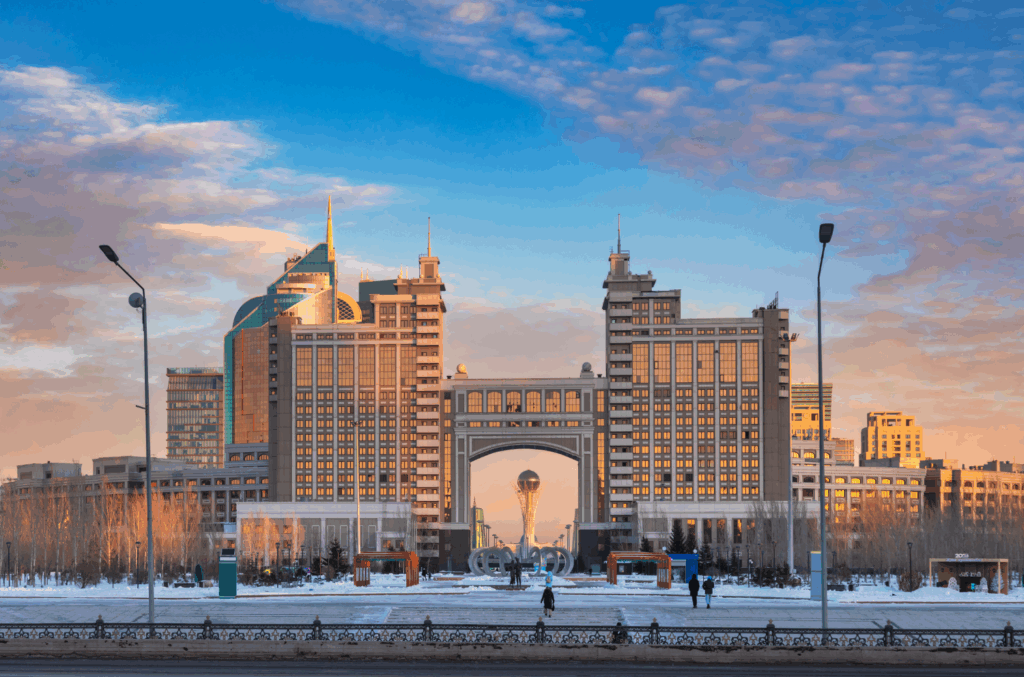
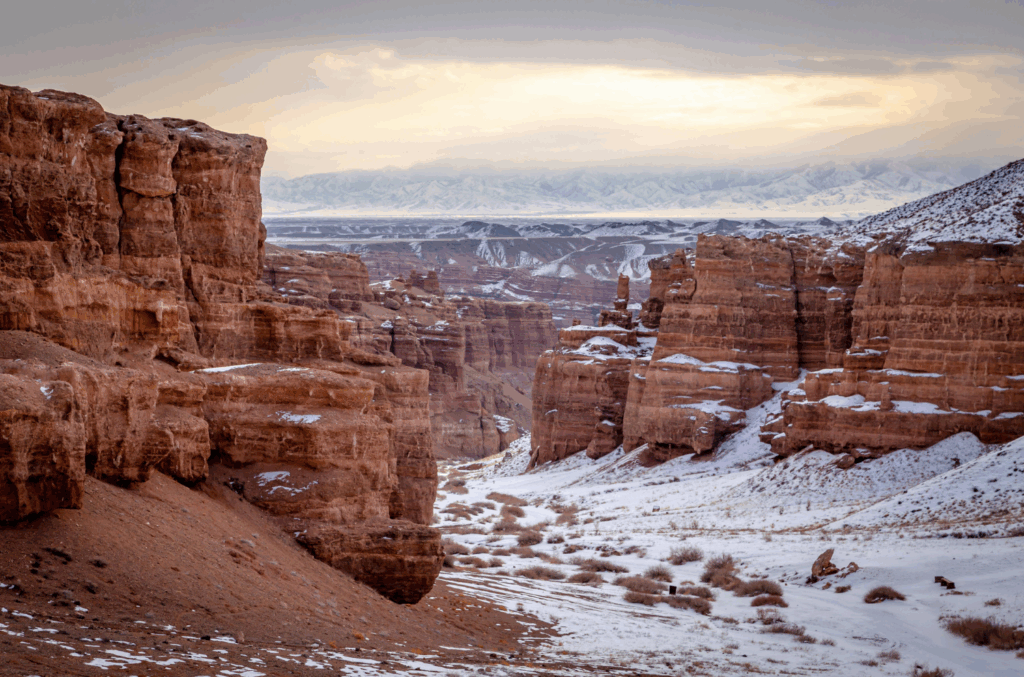
Kazakhstan is a large, landlocked country located in Central Asia and Eastern Europe. It is the world’s ninth-largest country by land area, covering an area of over 2.7 million square kilometers. The country is known for its diverse geography, including vast steppes, rugged mountains, and the world’s largest landlocked body of water, the Caspian Sea. Kazakhstan shares borders with Russia, China, Kyrgyzstan, Uzbekistan, and Turkmenistan.
Kazakhstan has a rich history and culture that dates back thousands of years. The region was once home to several powerful empires, including the Mongol Empire, the Kazakh Khanate, and the Soviet Union. Today, Kazakhstan is a modern country with a mix of traditional and modern influences.
The country is home to a diverse population of over 19 million people, made up of various ethnic groups, including Kazakhs, Russians, Uzbeks, Ukrainians, and Germans. The official language is Kazakh, although Russian is widely spoken, and the predominant religion is Islam, with a significant Christian minority.
Kazakhstan has a rapidly growing economy, driven by its abundant natural resources, including oil, gas, and minerals. The country is also becoming a hub for trade and transport in the region, thanks to its strategic location between Europe and Asia.
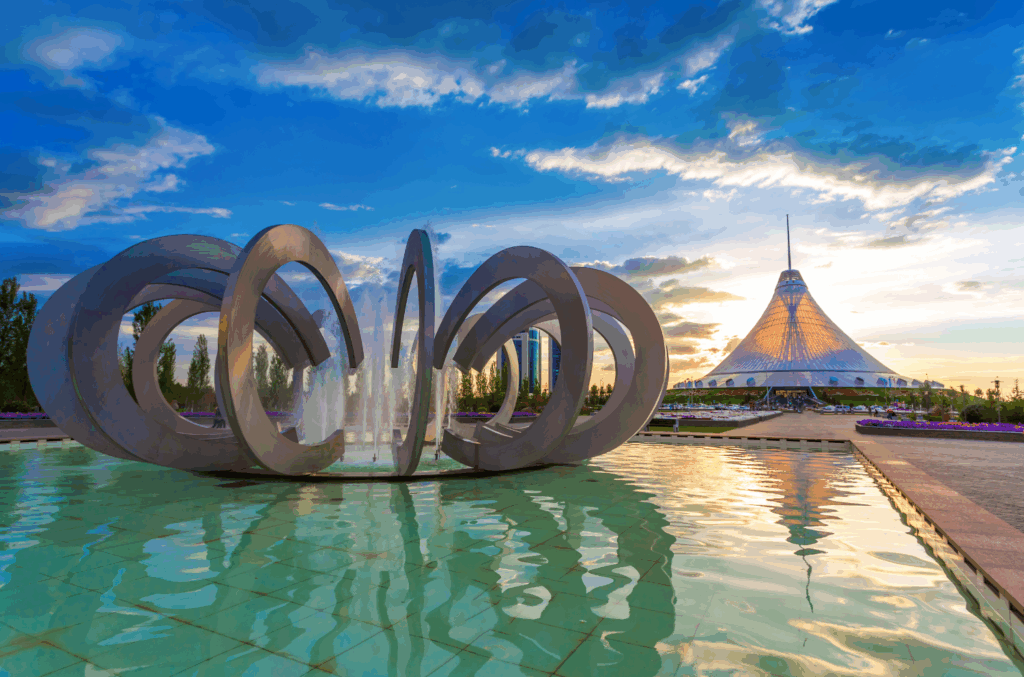
Tourism is also on the rise in Kazakhstan, with visitors drawn to its stunning natural landscapes, rich history, and vibrant culture. From exploring the vibrant cities of Almaty and Nur-Sultan to venturing out into the vast wilderness of the Altai Mountains or the steppes of the Kazakh countryside, there is something for everyone in this beautiful and diverse country.
WEATHER AND BEST TIME TO VISIT
Kazakhstan has a continental climate with warm summers and cold winters. The best time to visit the country is during the summer months of June to August when temperatures are warm and rainfall is low. However, keep in mind that this is also peak tourist season and prices for accommodation and flights may be higher. Spring and autumn can also be good times to visit, with mild temperatures and fewer crowds. Winter temperatures can drop well below freezing, so it is not recommended to visit during this season unless you are interested in winter sports or cold-weather activities.
HOW TO REACH
Kazakhstan can be reached by air, land, and sea.
By air: The two main international airports in Kazakhstan are the Almaty International Airport and the Nursultan Nazarbayev International Airport in Nur-Sultan. These airports have regular flights to and from major cities in Europe, Asia, and the Middle East.
By land: Kazakhstan shares borders with several countries, including Russia, China, Kyrgyzstan, Uzbekistan, and Turkmenistan. There are several border crossings between these countries, and buses and trains run between Kazakhstan and neighboring countries.
By sea: Kazakhstan has a port on the Caspian Sea, called the Port of Aktau. It is possible to reach Kazakhstan by sea from other Caspian Sea ports, such as Baku in Azerbaijan.
Once in Kazakhstan, there are several modes of transportation available, including buses, taxis, and trains. The railway system is well-developed in Kazakhstan and provides an efficient way to travel around the country. There are also domestic flights available between major cities.
LOCAL TRANSPORTATION
Kazakhstan has a well-developed transportation system, with various options for getting around the country. The most popular modes of transportation are buses, trains, taxis, and private cars. Here is some information on local transportation in Kazakhstan:
Overall, Kazakhstan has a reliable and affordable transportation system, with several options to choose from.
FOOD AND DRINKS, NIGHT LIFE
Kazakhstan has a rich culinary tradition influenced by its nomadic past and diverse ethnic population. Traditional Kazakh cuisine features meat, dairy products, and grains, with popular dishes including beshbarmak (noodles with meat and onions), kazy (horse meat sausage), and baursaki (fried dough). The country also has a strong tea-drinking culture and produces a variety of alcoholic beverages, including beer and vodka.
In larger cities such as Almaty and Astana, there is a growing restaurant and cafe scene, offering a variety of international cuisine as well as modern interpretations of traditional dishes. Nightlife in Kazakhstan is also growing, with bars, clubs, and music venues becoming more prevalent.
It is worth noting that Kazakhstani law prohibits the sale of alcohol between the hours of 9 pm and 11 am, although this is not always strictly enforced. Additionally, smoking is not permitted in many public places, including restaurants and cafes.
Overall, Kazakhstan offers a variety of dining and nightlife options for visitors, with a unique blend of traditional and modern influences.
VISA RULES
Most foreigners need a visa to enter Kazakhstan. Visas can be obtained at Kazakhstani embassies and consulates abroad or through the e-Visa portal. Citizens of some countries are exempt from visa requirements for a certain period of stay, including the United States, Canada, and the European Union member states. However, it is always advisable to check the visa requirements before planning your trip to Kazakhstan.
SAFETY
Kazakhstan is a relatively safe country to visit. Petty crime like pickpocketing and theft is not uncommon, especially in crowded areas and tourist destinations. It’s advisable to take necessary precautions like keeping valuable belongings safe, not carrying too much cash, and being aware of your surroundings. As with any travel, it’s always best to check with your embassy or consulate for any safety updates or concerns.
Additionally, it’s important to be aware of the country’s laws and regulations, as some actions that are legal in other countries may be considered illegal in Kazakhstan. For example, drug use and possession is strictly prohibited and can result in severe penalties, including imprisonment. It’s also important to be respectful of local customs and traditions, especially when visiting religious sites.
It’s important to note that Kazakhstan is a large country with a diverse population, and there may be some cultural and political tensions in certain regions. It’s always best to research your destination thoroughly and exercise caution, especially when traveling to areas outside of major cities.
DO’S AND DON’TS
DO’s:
DON’Ts:
MAIN PLACES (CITIES, TOWNS, COUNTRYSIDE)
Kazakhstan is the world’s ninth-largest country, located in Central Asia and Eastern Europe. It is the largest landlocked country in the world and has a diverse landscape that includes vast steppes, rugged mountains, and numerous lakes and rivers. Here are some of the main places to visit in Kazakhstan:
There are many other interesting places to visit in Kazakhstan, including historic towns, natural wonders, and cultural attractions.
CURRENCY EXCHANGE AND CUSTOMS ALLOWANCE
The national currency of Kazakhstan is the Kazakhstani tenge (KZT), and it is the only legal currency in the country. Visitors can exchange their foreign currency at banks, exchange offices, and hotels. Major credit cards are accepted in larger cities, but it is recommended to have cash on hand when traveling to smaller towns and rural areas.
The customs allowance for Kazakhstan allows visitors to bring in personal items, including one liter of alcohol, 200 cigarettes or 50 cigars, and up to $10,000 in cash without declaring it. However, it is important to check the customs regulations of your home country before bringing in any items to Kazakhstan.
AMENITIES: WATER, ELECTRICITY, INTERNET, TELEPHONE
Amenities in Kazakhstan are generally modern and reliable, especially in the bigger cities. Here are some general information about water, electricity, internet, and telephone in Kazakhstan:
GENERAL INFORMATION: TIME ZONE, LANGUAGE, RELIGION, HEALTH, CLOTHING, BUSINESS HOURS, BANKS, ETC
Time zone: Kazakhstan is located in Central Asia and has two time zones. The western part of the country, including the cities of Atyrau and Oral, is four hours ahead of Coordinated Universal Time (UTC+4), while the eastern part, including the cities of Almaty and Nur-Sultan (formerly Astana), is six hours ahead of Coordinated Universal Time (UTC+6).
Language: Kazakh and Russian are the official languages of Kazakhstan. Kazakh is the state language and is spoken by the majority of the population, while Russian is widely spoken as a second language.
Religion: Islam is the predominant religion in Kazakhstan, with the majority of the population being Sunni Muslims. There are also significant Christian and Jewish minorities.
Health: Kazakhstan has a modern healthcare system, but medical facilities outside of the main cities may not meet Western standards. Visitors are advised to have comprehensive health insurance and to carry any necessary medications with them.
Clothing: Kazakhstan has a varied climate, so visitors should pack for both hot and cold weather, depending on the season and the region they are visiting. In general, it is recommended to dress modestly and conservatively.
Business hours: Business hours in Kazakhstan are typically from 9:00am to 6:00pm, Monday to Friday. Some businesses may close for lunch between 1:00pm and 2:00pm.
Banks: Major international banks have branches in Kazakhstan, and ATMs are widely available in cities and towns. Credit cards are also accepted in many places.
Electricity: The standard voltage in Kazakhstan is 220-240 volts, and the frequency is 50 Hz. Electrical plugs and sockets in Kazakhstan are the European two-pin type.
Internet and Telephone: Internet access is available in most cities and towns in Kazakhstan, and many hotels and cafes offer free Wi-Fi. Kazakhstan’s country code is +7, and international calls can be made from hotels, phone booths, or mobile phones with international roaming.

BF-036, Baani City Center, Sector 63, Gurugram 122011, Haryana, India

The Holiday Platform
Copyright © 2025 Tripginny, All rights reserved. Powered by URAHL Venture