
+91 7042404014
QATAR COUNTRY FACTFILE
Qatar is a small but wealthy country located on the northeastern coast of the Arabian Peninsula, sharing its only land border with Saudi Arabia to the south and surrounded by the Persian Gulf on the other sides. Despite its compact size, Qatar holds a significant place in global geopolitics and economics, largely due to its vast natural gas and oil reserves. With a population of over 2.9 million people, a majority of whom are expatriates, Qatar is one of the wealthiest countries in the world in terms of GDP per capita.
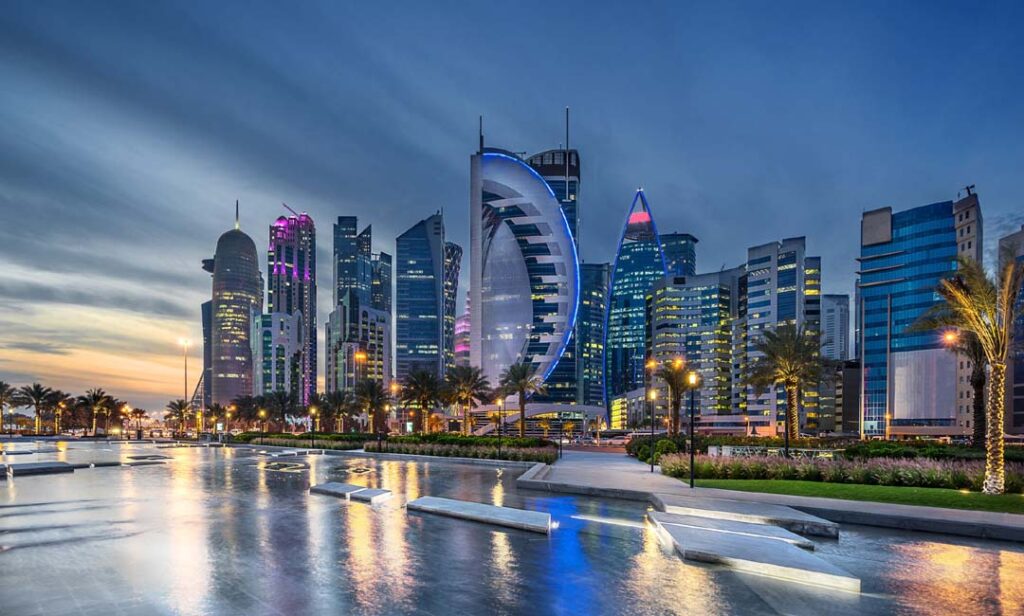
Qatar’s landscape is characterized by flat desert terrain, low-lying dunes, and arid coastal plains. While it lacks mountains or large forests, its striking desert beauty and Persian Gulf coastline offer scenic contrasts and opportunities for exploration. The country is also known for its innovative architectural skyline and well-planned urban infrastructure.
Doha, the capital city, is the political, economic, and cultural hub of the country. Other important cities include Al Wakrah, Al Rayyan, and Dukhan. These urban centers feature state-of-the-art infrastructure, luxury hotels, and world-class amenities, reflecting Qatar’s rapid development over recent decades.
Qatar has invested heavily in preserving and showcasing its cultural heritage, with attractions like the Museum of Islamic Art and Souq Waqif reflecting its deep-rooted traditions. The country has also gained global attention as the host of the FIFA World Cup 2022—the first such event held in the Middle East.
Qatar’s economy is driven by energy exports, particularly liquefied natural gas (LNG), although the government has taken steps toward diversification under the Qatar National Vision 2030. The country also boasts a high standard of living, with modern infrastructure and generous public services.
The climate is desert-like, with extremely hot summers and mild winters. Temperatures can soar above 45°C (113°F) during peak summer. The best time to visit Qatar is from November to March, when the weather is cooler and more pleasant.
WEATHER AND BEST TIME TO VISIT
Qatar has a desert climate, characterized by long, extremely hot summers and short, mild winters. Summers, which last from May to September, can see daytime temperatures exceeding 45°C (113°F), accompanied by high humidity. Dust storms are also common during this period.
Winters, from November to March, offer much more pleasant weather, with temperatures ranging between 17°C and 25°C (63°F to 77°F), making it the best time to visit. Rainfall is minimal and usually occurs between November and February in brief showers.
The cooler months are ideal for sightseeing, desert safaris, beach outings, and outdoor festivals, which are common in Qatar’s winter season.
HOW TO REACH
Qatar is a global travel hub and is well-connected to major international destinations.
By Air: Hamad International Airport in Doha is the main international gateway into Qatar and one of the busiest airports in the Middle East. It is served by Qatar Airways, the national carrier, as well as numerous international airlines flying to and from Asia, Europe, Africa, and the Americas.
By Land: Qatar shares a land border with Saudi Arabia, and visitors can enter by road through the Salwa border crossing. However, land travel is less common and may be subject to entry regulations.
By Sea: Qatar has modern ports such as Hamad Port, primarily for cargo and commercial use. Cruise ships also dock in Doha, especially during the winter cruise season.
Domestic Travel: Qatar is a small country, and domestic travel is mainly by road. Taxis, car rentals, and private vehicles are the most common modes of transportation.
It is advisable to check entry requirements, including visa and COVID-19 guidelines, before traveling to Qatar.
LOCAL TRANSPORTATION
Qatar has a modern and efficient transportation system, especially in its capital city, Doha.
Qatar’s public transport is efficient and tourist-friendly, particularly in urban areas.
FOOD AND DRINKS, NIGHTLIFE
Qatari cuisine is a delightful blend of traditional Arabic flavors, Indian spices, and Persian influences. Popular local dishes include machboos (spiced rice with meat), harees (cracked wheat with meat), and thareed (bread stew). Due to its multicultural population, Qatar offers a wide variety of international cuisines ranging from Indian and Filipino to Turkish and Italian.
Coffee and tea are integral to social gatherings, with Arabic coffee (gahwa) and dates often served to guests as a symbol of hospitality.
Qatar’s nightlife is relatively subdued compared to other countries due to cultural and religious norms. However, many international hotels host bars, lounges, and nightclubs that serve alcohol and feature live music or DJ events. These venues are mostly limited to 4- and 5-star hotels.
Note that alcohol is only available in licensed venues and is not served publicly or in supermarkets.
VISA RULES
Qatar offers visa-free or visa-on-arrival access to citizens of over 90 countries, including most European nations, the US, Canada, Australia, and parts of Asia. Travelers must have a passport valid for at least six months and a confirmed return ticket.
E-visa options are available through Qatar’s official visa portal. For residents of GCC countries, simplified entry processes may apply.
It is important to check the latest visa rules on the Ministry of Interior or Visit Qatar websites, as regulations may change.
SAFETY
Qatar is considered one of the safest countries in the world, with a very low crime rate. Violent crime is extremely rare, and petty crime is minimal. Nonetheless, travelers should remain cautious with personal belongings, especially in crowded areas.
Local laws are strict, and public behavior is expected to adhere to cultural norms. Drug offenses, alcohol misuse, and public intoxication are dealt with severely.
Health-wise, the country has excellent medical facilities. Travelers should stay hydrated, especially in the summer months, and use sunscreen to avoid heat-related illnesses.
DO’S AND DON’TS
Do’s:
Don’ts:
MAIN PLACES (CITIES, TOWNS, COUNTRYSIDE)
CURRENCY EXCHANGE AND CUSTOMS ALLOWANCE
The official currency of Qatar is the Qatari Riyal (QAR). Foreign currency can be exchanged at banks, airports, and licensed exchange centers. Major credit and debit cards are widely accepted across the country.
Customs Allowance:
AMENITIES: WATER, ELECTRICITY, INTERNET, TELEPHONE IN QATAR
Water: Tap water in Qatar is desalinated and technically safe but often avoided for drinking. Bottled water is preferred and widely available.
Electricity: 240V, 50Hz. British-style three-pin plugs are standard. Universal adapters may be required.
Internet: High-speed internet is widely accessible, with excellent coverage in hotels, cafes, and public places. 5G services are expanding across cities.
Telephone: Qatar has a modern telecom network. Prepaid SIM cards from Ooredoo and Vodafone are available at the airport and retail outlets, offering data and international calling packages.
GENERAL INFORMATION (TIME ZONE, LANGUAGE, RELIGION, HEALTH, CLOTHING, BUSINESS HOURS, BANKS, ETC) IN QATAR
Time Zone: Arabian Standard Time (UTC+3)
Language: Arabic is the official language; English is widely spoken in business and tourism.
Religion: Islam is the state religion, and Islamic practices strongly influence daily life.
Health: Excellent healthcare system. Private and public hospitals offer high-quality care. Travel insurance is recommended.
Clothing: Conservative clothing is advised. Lightweight cotton garments are ideal due to the heat. Swimwear is acceptable only at private beaches or pools.
Business Hours: Government offices operate from 7:00 AM to 2:00 PM (Sunday to Thursday). Private businesses typically work from 9:00 AM to 6:00 PM. Friday is a holy day, with many establishments closed until afternoon.
Banks: Open from 7:30 AM to 1:00 PM Sunday to Thursday. ATMs are widespread, and credit cards are commonly accepted.

BF-036, Baani City Center, Sector 63, Gurugram 122011, Haryana, India

The Holiday Platform
Copyright © 2025 Tripginny, All rights reserved. Powered by URAHL Venture