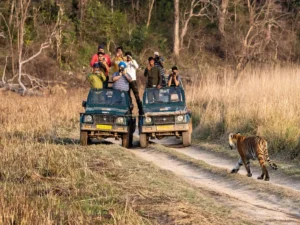
Between late-2024 and mid-2025 all three parks saw strong recovery and growth in visitor numbers driven by rising domestic tourism, improved infrastructure and active destination marketing. Ranthambore and Kaziranga recorded particularly large year-on-year increases and grew their standing among India’s top wildlife destinations; Corbett remained a high-volume, well-established winter/spring destination with steady domestic demand.
1) Visitor volumes (2024–25 season window)
- Jim Corbett (Uttarakhand) — official state statistics and reserve reporting put annual park visitors in the high hundreds of thousands for 2024 (Corbett listed with ~351,771 visitors in the Uttarakhand 2024 stats table; total season figures cluster around ~360k–370k depending on reporting periods). Corbett’s core season remains Oct–Jun.
- Ranthambore (Rajasthan) — Ranthambore saw record seasons in 2024–25 with very large inflows; public reports from the reserve and state sources cite visitor numbers in the several-hundred-thousand to 700k+ range when counting the FY/season window up to mid-2025 (Ranthambore reported a surge in 2025, with figures often quoted in the 600k–700k bracket for the tourism year/season). Ranthambore also reported material revenue gains alongside higher visitor counts.
- Kaziranga (Assam) — Kaziranga recorded an exceptional surge: media and park releases report ~400k+ visitors in the 2024–25 season window (for example 406,564 and 443,636 figures appear in reporting depending on cut-off dates), making it one of India’s top three most-visited parks in that period. International visitor share rose meaningfully too.
Takeaway: Ranthambore and Kaziranga showed the steepest growth (Ranthambore on sustained demand plus proximity to major metros; Kaziranga boosted by targeted promotion & high-profile visits). Corbett remained large but more stable year-on-year.
2) Domestic vs international mix
- Corbett: dominated by domestic travellers (weekenders and family groups from North India), with international arrivals present but a smaller share compared with Ranthambore/Kaziranga.
- Ranthambore: strong domestic base plus a sizable and recovering international segment (tour operators, wildlife photographers); foreign numbers increased substantially in 2024–25.
- Kaziranga: marked increase in international visitors during Oct 2024–May 2025 (media report ~17,000+ internationals in one reporting period), improving its global draw because of the one-horned rhino and new experiences (boat safaris, buffer-zone activities).
3) Seasonality & peak months
- Corbett: main season Oct–Jun; winter (Dec–Feb) is prime for tigers and birding; monsoon months park/zones close.
- Ranthambore: open Oct–Jun; peak in winter and early spring when vegetation is low and tiger sightings are highest.
- Kaziranga: official season typically Nov–Apr (park closes during monsoon floods); highest flows Nov–Mar, though buffer-zone and river-based experiences expand visitor options. Flooding risk shapes season length.
4) Tourist profile & behaviour
- Corbett: family groups, weekend escapes, birders and domestic nature enthusiasts; visitors often combine safaris with resorts/homestays.
- Ranthambore: mix of photography-oriented tourists, international wildlife travelers, honeymooners and short-break leisure travelers; many visitors book private gypsy/jeep safaris and lodge packages.
- Kaziranga: attracts conservation-minded travelers, international wildlife tourists focused on rhino/elephant/birding, researchers and growing numbers of domestic visitors seeking unique wildlife experiences.
5) Accommodation, length of stay & spend
- Corbett: wide range from budget forest rest houses to premium jungle lodges; average stay commonly 2–3 nights.
- Ranthambore: strong mid-to-high end lodge market near Sawai Madhopur; many visitors combine 2–4 night stays with repeat safari bookings; reported high revenue generation in 2024–25.
- Kaziranga: mix of eco-lodges, government rest houses and growing boutique options; tourism revenues rising as visitor volumes increase.
6) Infrastructure, access & management differences
- Accessibility: Ranthambore benefits from proximity to Jaipur and Delhi (good road/rail links). Corbett is accessible from Delhi/Dehradun but travel time is longer for many visitors. Kaziranga requires longer transit (Guwahati gateway) though infrastructure upgrades have improved access.
- On-ground management: all three reserves have been expanding regulated safari slots, entry rules and eco-tourism activities. Kaziranga’s promotion of buffer-zone experiences (cycling, boat safaris) and Ranthambore’s zone management to spread pressure are notable.
7) Conservation impacts & carrying capacity
- Visitor growth brings economic benefit but also pressure: vehicle density, habitat disturbance, waste, and human–wildlife interface risks are common challenges. Each park is balancing revenue with stricter zone controls, regulated jeep/gypsy numbers, and community-based tourism to spread benefits and reduce pressure. Monitoring carrying capacity and enforcing zone rules remains critical.
8) Trends observed in 2024–25
- Post-pandemic recovery matured into robust domestic demand; international arrivals improved unevenly (stronger for Ranthambore & Kaziranga than Corbett in the cited windows).
- Parks that invested in visitor infrastructure, marketing and new experiences (Kaziranga buffer-zone, Ranthambore upgraded facilities) captured the largest growth.
9) Recommendations for stakeholders (park administrations, tour operators, local government)
- Enforce and communicate clear carrying-capacity limits (per zone/day) and continue strict booking controls for safaris.
- Invest in last-mile access and sustainable transport (electric safari vehicles, regulated entry timings) to reduce emissions and disturbance.
- Develop community tourism in buffer zones (homestays, craft markets) so local economies capture more value and reduce poaching incentives.
- Promote off-peak season experiences (birding, wellness, cultural circuits) to smooth demand.
- Publish transparent visitor, revenue and impact data each season to guide adaptive management. (These measures align with what led to growth in Kaziranga and Ranthambore while protecting ecosystems.)