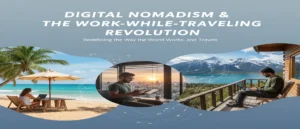
Redefining the Way the World Works, Lives, and Travels
Over the past decade, a quiet revolution has been transforming the way people view work, freedom, and geography. The rise of high-speed internet, portable technology, and flexible job structures has created a new species of global worker — the digital nomad. No longer tied to cubicles or boardrooms, these individuals blend productivity with adventure, conducting meetings from beach cafés, coworking hubs, or mountain lodges.
What began as a niche lifestyle for tech freelancers has evolved into a mainstream movement, reshaping tourism, hospitality, and even immigration policies. Asia, in particular, has emerged as the epicenter of digital nomadism, attracting remote professionals with its affordability, culture, and growing digital infrastructure.
THE DIGITAL NOMAD DEFINED
Beyond Remote Work — A Lifestyle Choice
A digital nomad is not just someone who works remotely; it’s someone who chooses mobility as a constant. They carry their offices in their backpacks — laptops, headphones, and a stable Wi-Fi connection become the new corner office.
This lifestyle is built on three core freedoms:
- Freedom of location — the ability to work from anywhere.
- Freedom of time — the ability to design one’s own schedule.
- Freedom of purpose — the ability to pursue passion and self-growth alongside work.
Digital nomadism is, at its core, about reclaiming control over one’s environment — replacing the routine of the office with the rhythm of discovery.
WHY IT’S SURGING NOW
The Forces Driving the Work-From-Anywhere Era
Several powerful trends converged to make digital nomadism a global reality:
1. The post-pandemic workplace shift.
COVID-19 forced millions of professionals to work remotely. As companies discovered productivity didn’t suffer, “work from anywhere” policies followed.
2. Cloud-based collaboration.
Tools like Zoom, Slack, Notion, and Asana made it possible to collaborate seamlessly across borders.
3. Lifestyle reprioritization.
People began questioning the 9-to-5 grind and valuing experiences, mental health, and balance.
4. Government adaptation.
Countries began offering digital nomad visas, recognizing remote workers as contributors to local economies.
5. Affordable global mobility.
Low-cost air travel, co-living networks, and online booking platforms made it easier than ever to relocate fluidly.
ASIA: THE GLOBAL HUB FOR DIGITAL NOMADS
The Asia-Pacific region has emerged as the world’s most vibrant and diverse destination for remote professionals. Its combination of cost efficiency, connectivity, and cultural depth has made it irresistible.
Top Digital Nomad Hotspots in Asia
- Bali, Indonesia: The spiritual heart of the digital nomad scene. With coworking hubs like Dojo Bali and Outpost, yoga studios, and surf beaches, it blends productivity with paradise.
- Chiang Mai, Thailand: Low living costs, welcoming locals, and thriving coworking communities make it one of the world’s most sustainable long-term bases.
- Goa, India: Known for creative energy and relaxed vibes, Goa is reinventing itself as a work-and-wellness hub for remote professionals.
- Canggu, Indonesia: A modern coworking-meets-café culture driven by freelancers, content creators, and tech entrepreneurs.
- Da Nang, Vietnam: Coastal charm, reliable Wi-Fi, and growing expat infrastructure make it Southeast Asia’s rising star.
- Kuala Lumpur, Malaysia: A cosmopolitan city offering strong connectivity, affordability, and visa flexibility.
- Taipei, Taiwan: Tech-forward, safe, and culturally rich — an ideal location for digital professionals in creative industries.
These hubs share three defining traits — good internet, affordable living, and a vibrant community of like-minded professionals.
WORK-FROM-ANYWHERE ECONOMY
How Destinations Are Adapting
Governments and tourism boards across Asia are recognizing the long-term economic potential of attracting digital nomads. Unlike short-term tourists, they stay longer, spend steadily, and often integrate into local communities.
Thailand’s Long-Term Resident (LTR) visa, Indonesia’s five-year digital nomad visa, and Malaysia’s DE Rantau program are examples of how the region is embracing this shift. Even smaller nations like Sri Lanka and the Maldives are developing policies to welcome location-independent workers.
Hotels, resorts, and tour operators are also responding. Many now offer “workation” packages — combining luxury accommodation with business facilities, flexible stays, and wellness programs. Resorts in Bali, Phuket, and Langkawi are turning suites into hybrid workspaces, offering private offices with ocean views and high-speed connectivity.
THE DIGITAL NOMAD ECONOMY
Redefining Hospitality and Real Estate
The rise of nomads has fueled an entire ecosystem — from co-living and co-working spaces to specialized travel insurance, remote banking, and cross-border health solutions.
Hospitality providers are learning to design flexible-stay models. Long-term discounts, subscription-based accommodation, and loyalty programs tailored for mobile professionals are gaining traction.
In cities like Bangkok, Ubud, and Manila, digital nomad communities have inspired a cultural revival — small cafés doubling as networking venues, startups offering legal support for visas, and social enterprises creating creative hubs.
This economy is not just about work — it’s about community, creativity, and connection.
TECHNOLOGY AS THE BACKBONE OF NOMADISM
Without technology, the digital nomad lifestyle would not exist.
1. Cloud computing: Enables access to files and tools from anywhere.
2. Collaboration platforms: Keep teams united across time zones.
3. Automation tools: Reduce administrative work, letting people focus on creativity.
4. AI-powered assistants: Help with language translation, itinerary planning, and productivity.
5. Virtual networking: Global online communities on platforms like Discord, Slack, and Reddit create social belonging even in constant motion.
Technology is both enabler and equalizer — it allows someone sitting in a mountain village in Nepal to collaborate with a design studio in London or a startup in San Francisco.
THE HUMAN SIDE OF DIGITAL NOMADISM
Connection, Identity, and Purpose
Despite the freedom, digital nomadism is not without emotional challenges. Constant movement can blur personal identity and create a sense of impermanence. Loneliness is a common experience. Many find belonging through digital nomad communities — local meetups, shared houses, or online groups.
At its best, nomadism builds empathy and adaptability. People learn to navigate new cultures, languages, and routines, gaining a kind of wisdom that no office can provide. For many, it becomes more than a work choice — it becomes a life philosophy: less accumulation, more experience.
THE BUSINESS ANGLE
How Travel and Hospitality Brands Can Capture the Nomad Market
The digital nomad revolution is reshaping tourism into a longer-stay, purpose-driven economy. To attract these travelers, businesses must adapt in several strategic ways:
- Flexible infrastructure: Hotels and resorts can provide coworking lounges, fast Wi-Fi, private call rooms, and ergonomic furniture.
- Community-driven design: Create spaces that foster connection — networking nights, wellness workshops, and local collaborations.
- Workation marketing: Position packages as “live and work here” rather than “stay here.” Promote balance, not escapism.
- Technology integration: Use digital concierge apps, AR city guides, and smart-room technology for seamless experiences.
- Cultural engagement: Offer programs that connect nomads with local artisans, cuisine, and volunteer initiatives.
Forward-looking travel companies are also developing subscription-based travel models — a global pass that lets members live in different destinations each month with all logistics handled.
CASE STUDIES: DESTINATIONS LEADING THE WAY
1. Bali, Indonesia:
The island has become synonymous with the nomadic lifestyle. Its thriving ecosystem of coworking hubs, creative cafés, and wellness retreats draws entrepreneurs from around the world. Initiatives like the Bali Digital Nomad Visa aim to balance tourism with long-term economic stability.
2. Thailand:
Bangkok, Phuket, and Chiang Mai are experimenting with “Work-from-Thailand” programs. The Thai government’s LTR visa offers 10-year stays for remote professionals, a major leap toward policy innovation.
3. Malaysia:
The DE Rantau initiative promotes Malaysia as the digital nomad hub of ASEAN, with visa support, coworking grants, and partnerships with major hotel chains.
4. India:
From Goa’s beachside hubs to Himachal’s mountain retreats, India’s diversity provides endless choice. States like Kerala and Sikkim are now exploring remote work tourism as part of their development plans.
5. Japan:
Tokyo and Okinawa are piloting digital nomad programs targeting global tech professionals, with strong emphasis on cultural exchange and sustainable tourism.
SUSTAINABILITY AND IMPACT
Balancing Freedom with Responsibility
While the nomadic lifestyle celebrates independence, it also raises questions about sustainability. Long flights, short stays, and high mobility can strain local ecosystems. Responsible nomadism means minimizing impact — choosing eco-certified stays, supporting local businesses, and respecting cultural norms.
Asia’s eco-lodges and green coworking spaces are leading examples of how technology and sustainability can coexist. From bamboo offices in Bali to solar-powered cafés in Sri Lanka, a new generation of travel spaces is merging ecological awareness with digital connectivity.
CHALLENGES OF THE NOMADIC LIFESTYLE
Digital nomadism is not without its difficulties.
- Visa uncertainty: Not every country has clear policies for remote workers.
- Tax complications: Earning income across borders can be complex.
- Work-life balance: The blend of travel and work can blur boundaries.
- Connectivity limitations: Not every remote paradise has reliable Wi-Fi.
- Cultural adjustment: Constant adaptation can lead to fatigue.
Yet, for many, the rewards outweigh the obstacles. The freedom to design one’s own life remains the ultimate luxury.
FUTURE OF WORK-TRAVEL HYBRID
From Lifestyle Trend to New Normal
By 2030, an estimated 35 million people worldwide will live as digital nomads. The future will see the rise of:
- Nomad Villages: Entire towns designed for remote professionals, blending housing, coworking, and culture.
- Blockchain-based travel identity systems: Simplifying cross-border mobility.
- AI travel companions: Personal digital concierges that assist with bookings, language, and navigation.
- Hybrid visas: Merging tourism, business, and residency models.
The line between tourist and resident will continue to blur. The new economy will reward adaptability, curiosity, and cultural literacy.
LESSONS FOR THE HOSPITALITY INDUSTRY
Hotels and resorts must think beyond traditional room sales. The new traveler doesn’t want a short escape; they want a temporary home. The brands that succeed will be those that:
- Offer subscription stays across multiple properties.
- Design community-based living experiences.
- Integrate wellness, productivity, and sustainability in one package.
- Build digital ecosystems where guests connect and collaborate.
Hospitality’s evolution lies not in bigger resorts but in smarter, human-centered experiences.
THE SOUL OF THE MOVEMENT
Work, Freedom, and Meaning
The digital nomad movement is not just about working on the beach. It’s about reclaiming life from rigidity. It’s a quest for alignment — between passion and productivity, purpose and exploration.
In every café in Ubud, every coworking space in Chiang Mai, you’ll find people chasing not just careers, but a different definition of success. It’s not measured by titles or possessions, but by freedom, creativity, and human connection.
TAKEAWAY FOR TRAVEL BUSINESSES
For tour operators, resorts, and hospitality entrepreneurs, the message is clear:
- Design for flexibility. Nomads value month-to-month freedom.
- Invest in digital infrastructure. Reliable Wi-Fi is now a basic utility.
- Build experiences around purpose. Offer opportunities for learning, volunteering, and creativity.
- Tell authentic stories. Position your brand not as a service provider, but as a facilitator of transformation.
CONCLUSION
A Borderless Future
The rise of the digital nomad marks a pivotal moment in the history of travel. Work is no longer a place — it’s a mindset. For millions, the world has become both office and playground.
Asia, with its warmth, affordability, and innovation, stands at the center of this transformation. For the hospitality industry, this is not a passing trend — it is the foundation of the next decade of tourism growth.
The movement toward borderless living will continue to expand, inspiring people to blend work with wanderlust, productivity with passion, and business with belonging.
In the end, digital nomadism is about something deeper than mobility. It’s about rediscovering what it means to live — freely, purposefully, and globally connected.