In an age when skyscrapers grow faster than trees and digital lives dominate waking hours, travelers across the world are yearning to reconnect with what’s real — the scent of rain on forest soil, the call of a hornbill at dawn, the stillness of a mountain lake. In the Asia-Pacific, this yearning is crystallizing into one of the most powerful travel movements of our time: Nature- and Wildlife-Centric Experiences.
From the tiger reserves of India to the coral kingdoms of Indonesia, from Bhutan’s green valleys to the mangrove labyrinths of Malaysia, Asia-Pacific’s wild heart is pulsing louder than ever. These destinations are no longer just remote escapes; they are emotional sanctuaries — places that restore balance to minds fatigued by modernity.
For holiday businesses, this shift represents a profound opportunity: to evolve from providing holidays to offering reconnection — to nature, to self, and to something larger than either.
1. The New Definition of Travel: From Seeing to Feeling
The modern traveler is not content with passive sightseeing. They crave immersion — experiences that move them emotionally, physically, even spiritually. Nature-based tourism delivers exactly that.
Gone are the days when “eco-tourism” meant a dusty campsite or a rustic hut. Today’s eco-lodges, wildlife reserves, and nature retreats blend comfort with consciousness. They invite travelers to participate — not just observe.
A dawn trek through a bamboo forest, a guided reef dive, or a night under stars in a remote desert — these are not luxuries, but essentials for a generation that equates meaning with memory.
In this new vocabulary of travel, the “wild” is no longer an optional detour. It is the destination itself.
2. The Global Shift Toward Nature-Based Travel
Globally, nature-based tourism is one of the fastest-growing segments in the travel industry. According to the UN World Tourism Organization (UNWTO), it accounts for 20% of all international travel and is growing at nearly twice the rate of traditional tourism.
The drivers are clear:
- Post-pandemic mindfulness: Nature heals, and travelers want that therapy.
- Sustainability awareness: People are choosing holidays that support conservation.
- Climate anxiety: As the planet warms, seeing nature’s beauty firsthand feels urgent — almost sacred.
- Digital detox: Silence and wilderness have become the new luxury.
Nowhere is this movement more dynamic than in Asia-Pacific, a region that holds over 60% of global biodiversity and some of the planet’s last untouched wildernesses.
3. The Asia-Pacific Advantage: Diversity and Discovery
Asia-Pacific is uniquely blessed. It holds everything — rainforests, reefs, deserts, volcanoes, glaciers, and islands. For travelers, it’s a geography of infinite choices; for tourism entrepreneurs, it’s a goldmine of opportunity.
• India:
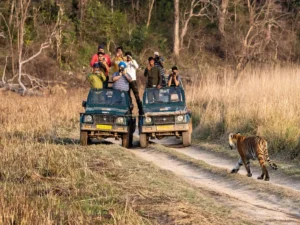
From the tiger-rich forests of Ranthambhore and Bandhavgarh to the rhino wetlands of Kaziranga and the snow leopard peaks of Ladakh, India is rewriting wildlife tourism. The rise of eco-lodges, wildlife photography safaris, and conservation-based luxury stays reflects a deepening respect for its biodiversity.
• Indonesia:
With over 17,000 islands, Indonesia is a biodiversity superpower. Beyond Bali, destinations like Komodo, Raja Ampat, and Sumatra’s Leuser ecosystem are redefining the travel narrative with sustainable lodges and community-run nature treks.
• Sri Lanka:
Yala and Wilpattu are among the world’s best leopard habitats. Yet Sri Lanka’s real magic lies in its ability to combine wildlife, beaches, and culture seamlessly — allowing a traveler to surf at sunrise and watch elephants by sunset.
• Thailand:
Beyond Bangkok and Phuket, Thailand’s north and west hide pristine forests, ethical elephant sanctuaries, and immersive jungle lodges. “Soft adventure” trails like Chiang Rai’s eco-villages are attracting mindful travelers.
• Malaysia & Borneo:
The Danum Valley and Kinabatangan River rank among the world’s most rewarding wildlife experiences — orangutans, pygmy elephants, clouded leopards. Sabah’s luxury eco-lodges prove sustainability can coexist with sophistication.
• Nepal & Bhutan:
While Nepal draws trekkers to Everest and Annapurna, Bhutan offers an even rarer promise: carbon-negative tourism. Its forested landscapes and wildlife sanctuaries showcase conservation-led prosperity.
• Australia & New Zealand:
From Tasmania’s wilderness to New Zealand’s fjords, the southern reaches of Asia-Pacific are models of nature-integrated travel — emphasizing stewardship, not exploitation.
4. The Psychology of the Wild: Why We Seek Nature
Scientists and psychologists now agree: humans are biophilic by nature. We have an innate emotional connection to natural systems — a bond modern life has muted but never erased.
Studies show that even short immersions in wild environments lower cortisol levels, reduce anxiety, and boost creativity. The Japanese practice of Shinrin-yoku — “forest bathing” — has become a global wellness trend, inspiring forest lodges and guided mindfulness treks from Japan to Bali.
Travelers are not escaping to nature; they are returning home to it.
And for holiday brands, this insight transforms strategy: Nature is not a niche — it’s a human necessity.
5. The Rise of Eco-Lodges: Comfort Meets Consciousness
The new icons of nature-based tourism are not marble resorts but eco-lodges — handcrafted sanctuaries that integrate architecture, ecology, and emotion.
Imagine waking up to birdsong in a bamboo villa overlooking a jungle river. Solar panels power your stay, local farmers supply your breakfast, and your shower water is filtered and reused. Every detail whispers sustainability without sacrificing comfort.
Examples across Asia-Pacific include:
- Bensley Collection – Shinta Mani Wild (Cambodia): Luxury tents strung along a river valley where guests fund forest protection.
- Borneo Rainforest Lodge (Malaysia): Immersed in 130 million years of rainforest heritage.
- Sukoon Houseboat (Kashmir, India): Solar-powered, zero-plastic luxury on Dal Lake.
- Chumbe Island Coral Park (Tanzania/Indian Ocean): A private island where every stay funds marine conservation.
- Nihi Sumba (Indonesia): Once voted the world’s best hotel — rooted in sustainability and community.
These lodges are redefining luxury: not opulence, but alignment — with nature, culture, and conscience.
6. Wildlife Tourism: The Call of the Wild
Wildlife tourism in Asia-Pacific is exploding — not through mass safaris, but through curated, ethical experiences that prioritize animal welfare and habitat protection.
A New Code of Conduct
Modern travelers reject exploitative tourism. No more elephant rides, no tiger selfies, no marine shows. Instead, they seek ethical observation, guided by conservationists who interpret rather than entertain.
Flagship Experiences
- Tigers in India’s central reserves (Bandhavgarh, Tadoba, Kanha).
- Orangutans in Borneo’s Sepilok and Bukit Lawang sanctuaries.
- Marine turtles in Sri Lanka’s Rekawa Beach.
- Komodo dragons on Komodo and Rinca Islands.
- Whale sharks in the Philippines’ Donsol Bay (not Oslob).
- Snow leopards in Ladakh’s high Himalayas.
Each encounter becomes an emotional anchor — an unfiltered connection to something primal.
Wildlife tourism today isn’t about ticking off species; it’s about understanding coexistence. Travelers don’t just take pictures — they take responsibility.
7. The Eco-Adventure Boom
Adventure and nature are merging in new ways. Eco-adventures — guided treks, river kayaking, reef snorkeling, mountain biking — are now designed around low-impact principles.
Key trends include:
- Carbon-light exploration: Cycling or hiking-based travel itineraries.
- Ocean-friendly diving: Bans on single-use plastics, reef-safe sunscreens, and citizen science.
- Community adventure models: Employing local guides and reinvesting fees into conservation.
- Hybrid itineraries: Combining wildlife experiences with wellness — yoga in forests, meditation by rivers.
The eco-adventure traveler is not an adrenaline junkie; they’re an awareness seeker. Every challenge — a climb, a dive, a trail — becomes a conversation with nature.
8. Community & Conservation: The Heartbeat of Sustainability
The soul of successful nature tourism lies in one principle: what benefits nature must benefit people too.
Across Asia-Pacific, local communities are emerging as co-guardians of their ecosystems:
- In India, the “Homestay Revolution” in Himalayan villages turns residents into custodians of biodiversity.
- In Borneo, community-run forest treks sustain both livelihoods and orangutan corridors.
- In Fiji, marine conservation zones are patrolled by locals trained as eco-guides.
- In Laos, the Nam Et-Phou Louey Night Safari funds tiger conservation through visitor revenue.
These models prove that conservation is not charity — it’s a circular economy. The traveler funds protection, the community gains income, the environment thrives.
9. Technology Meets Ecology
Surprisingly, technology — often blamed for alienating humans from nature — is now helping protect it.
- Drone monitoring detects poaching and illegal logging.
- Blockchain traceability ensures eco-lodges source local, ethical materials.
- AI-based wildlife identification apps enrich traveler education.
- AR/VR experiences simulate sensitive habitats without physical intrusion.
Digital tools are transforming eco-tourism into a data-driven guardian of biodiversity, where every guest becomes a micro-conservationist.
10. Case Studies: Asia-Pacific’s Nature Pioneers
1. Tiger Tops, Nepal
Founded in the 1960s, this legendary eco-lodge pioneered responsible safari tourism in the Himalayas, now solar-powered and community-managed.
2. Misool Eco Resort, Raja Ampat (Indonesia)
A private marine reserve larger than Singapore — built on an abandoned shark-finning site. Coral health has since rebounded 250%.
3. Cardamom Tented Camp, Cambodia
Operates under the motto “Stay with us, save the forest.” Each stay funds ranger patrols in one of Southeast Asia’s last great rainforests.
4. Baghvan Lodge, Pench (India)
Part of Taj Safaris, it blends five-star service with local conservation, employing villagers as trackers and naturalists.
5. Kinabatangan Eco-Lodge, Malaysia
Zero-waste, solar-powered, and designed on stilts to protect floodplain biodiversity.
These pioneers show how profitability and preservation can coexist when tourism is designed with purpose.
11. Market Trends & Traveler Profiles
Traveler Demographics
- Millennials and Gen Z (ages 25–40): Primary drivers of the eco-travel market; value authenticity, impact, and social responsibility.
- High-net-worth “Conscious Luxury” travelers: Willing to pay premium rates for exclusivity that aligns with sustainability.
- Families: Increasingly choosing educational nature retreats over urban theme parks.
Spending Patterns
- Nature travelers spend 18–25% more per trip than traditional tourists.
- They favor smaller, higher-quality operations.
- They exhibit strong loyalty and high repeat visitation rates.
For the hospitality sector, this translates into longer stays, higher margins, and brand differentiation.
12. Challenges on the Green Road
While the promise of nature-centric travel is immense, the path demands caution.
- Overcrowding: Even eco-destinations can suffer from “green overtourism.”
- Greenwashing: Some resorts use sustainability as a marketing label without real change.
- Community conflicts: Mismanaged tourism can disrupt local life.
- Climate threats: Coral bleaching, glacial melt, and deforestation threaten key attractions.
The solution lies in transparency, education, and measured growth — scaling consciously rather than rapidly.
13. Designing the Future of Nature Tourism
Holiday businesses aiming to tap this megatrend should embed sustainability into strategy, not decoration.
Key Principles:
- Protect before you promote: Conservation first, marketing second.
- Empower local stakeholders: Hire and train from the community.
- Design for minimal impact: Use renewable materials, water recycling, and low-energy design.
- Educate travelers: Transform them into advocates, not spectators.
- Measure and communicate impact: Publish annual sustainability reports.
These principles don’t just attract travelers — they build trust and brand longevity.
14. Opportunities for Holiday Businesses
The market potential is immense for operators who position themselves at the intersection of experience, ethics, and environment.
Emerging Business Models:
- Wildlife & wellness retreats: Yoga and meditation in national parks.
- Floating eco-resorts: Built on low-impact pontoons in wetlands or lakes.
- Nature learning hubs: Educational tourism for schools and families.
- Digital detox lodges: Remote stays with zero connectivity and 100% serenity.
- “Rewilding” experiences: Guests participate in planting, conservation, or species monitoring.
By combining immersion with purpose, these concepts transform hospitality from a service into a mission.
15. Policy and Protection: Governmental Moves
Across Asia-Pacific, governments are recognizing eco-tourism as a strategic national asset.
- India: “Green Circuit” projects under Swadesh Darshan promote sustainable infrastructure.
- Indonesia: Marine Protected Areas expanded by 20%.
- Thailand: Bans on coral-damaging sunscreens and plastic waste in national parks.
- Bhutan: Mandatory sustainability fee to limit overtourism.
- Australia & New Zealand: Stringent eco-certification for tourism businesses.
Public-private partnerships are now critical to protecting fragile ecosystems while harnessing economic benefits.
16. The Cultural Dimension: Nature and Spirituality
In Asia, nature is not just scenery — it’s sacred. From the Japanese reverence for cherry blossoms to India’s worship of rivers, from Bali’s mountain offerings to Maori respect for land spirits, nature spirituality is woven into culture.
Travelers increasingly seek these dimensions — spiritual trekking, forest meditation, river rituals — as a form of cultural ecology.
For hospitality brands, integrating spiritual storytelling deepens the experience, connecting nature with meaning.
17. Future Outlook (2026–2035): The Decade of Regenerative Travel
The next frontier is not sustainability, but regeneration — tourism that actively improves ecosystems.
Expect to see:
- Carbon-positive lodges.
- Rewilding partnerships with conservation NGOs.
- Tokenized conservation credits, where every booking contributes to measurable biodiversity restoration.
- AI-driven conservation forecasting for habitat protection.
The mantra is evolving from “leave no trace” to “leave it better.”
18. Marketing the Wild: Storytelling with Soul
In an era of content overload, the most powerful marketing for nature-centric travel is authentic storytelling — rooted in the voices of rangers, guides, and local stewards.
Visual storytelling (documentary reels, field diaries, photo essays) resonates more deeply than polished ads.
Social media campaigns built around education + emotion — like “One Tree, One Traveler” or “Adopt a Coral” — attract conscious audiences and investor confidence alike.
19. Why Nature Is the Ultimate Luxury
Luxury has evolved. It’s no longer marble bathrooms or Michelin stars. It’s privacy, purity, and perspective.
What could be more exclusive than having a rainforest sunrise all to yourself? Or swimming in a lagoon that civilization forgot?
For the world’s new elite, the wild has replaced the penthouse as the ultimate indulgence.
20. Conclusion: Returning to the Source
In the end, nature-centric travel is not a fad — it’s a philosophical correction. A rebalancing of humanity’s relationship with its home planet.
As the Asia-Pacific leads the way, every eco-lodge, nature retreat, and wildlife experience carries a message far beyond its location: that we are guests on Earth, and good guests leave things better than they found them.
For holiday businesses, embracing this truth is not just a marketing strategy — it’s a moral evolution.
Because the next traveler isn’t looking for just a room with a view.
They’re looking for a reason to belong again — and nature, in all her untamed grace, is extending the invitation.
Takeaway for Holiday Businesses:
Offering unique nature experiences — wildlife encounters, immersive eco-lodges, remote nature stays — isn’t just profitable; it’s purposeful. It taps into the most enduring human desire: to reconnect with the living world. The brands that understand this won’t just survive the next travel wave — they’ll lead it.